


Helping Heritage Crafts
26th January 2026
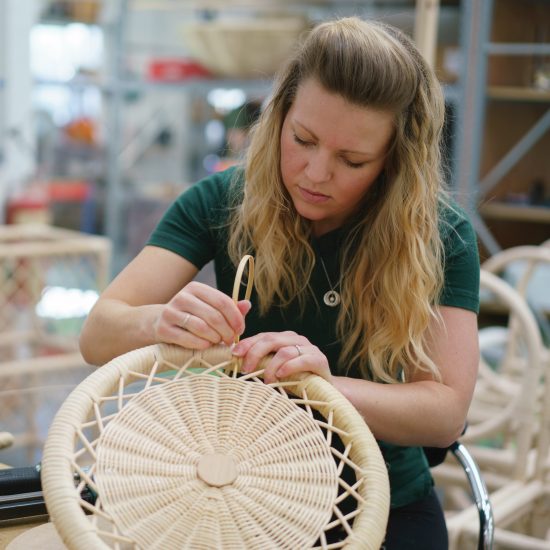
Essex has been shaped over centuries by traditional crafts and skills. Thatched roofs and decorative pargeting are just two examples of crafts that have helped define the county’s landscape and history.
National charity Heritage Crafts has warned that many traditional skills are now endangered, with some at risk of being lost forever. Funding from the Salter McKinlay Charitable Fund, established with ECF in 2014, is helping to preserve at-risk skills through grants of up to £2,000 from the Heritage Crafts Endangered Crafts Fund, launched in 2019.
Each year, Heritage Crafts publishes a Red List highlighting how many traditional crafts are in danger. In 2025, 71 crafts were listed as critically endangered and 94 as endangered. Crafts classed as critically endangered are those at serious risk of no longer being practised, often due to a shrinking number of craftspeople, limited training opportunities, low financial viability or no clear way to pass on skills.
Daniel Carpenter, Executive Director of Heritage Crafts, said: “The Red List underscores the urgent need for greater investment and support to safeguard these skills for the next generation. Reversing this decline would represent not just the continuation of skilled trades, but also a significant boost to the UK’s cultural heritage.”
Keeping Endangered Crafts Alive
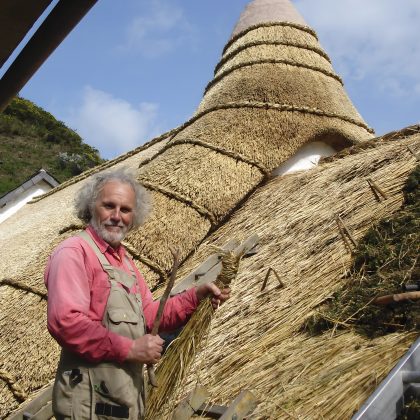
Essex coppicer Andy Basham received an Endangered Crafts Fund grant to learn how to make thatching spars from the last remaining spar maker in East Anglia and to equip himself for production from his own hazel coppice.
Andy has worked for more than 17 years at Hales Wood near Saffron Walden, using traditional hand tools and techniques to harvest hazel for a wide range of craft uses.
While the market for English hazel spars remains strong, a lack of new entrants meant the craft was at risk of disappearing from East Anglia. The grant enabled specialist training with Charlie Potter, ensuring the skill can be passed on.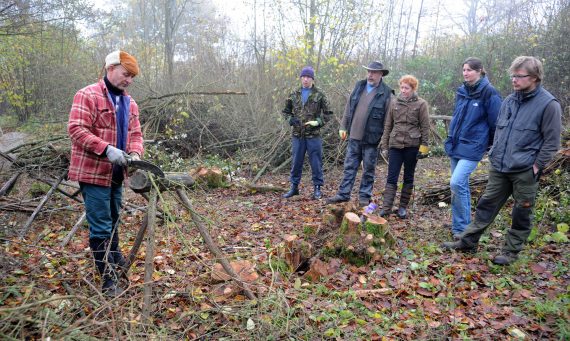
Essex-based glass artist Elena Fleury-Rojo
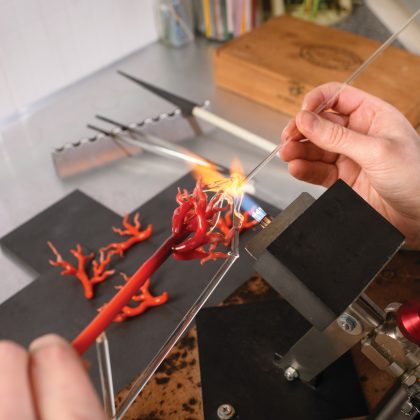
Elena Fleury-Rojo was supported by Heritage Crafts in 2024 through a training bursary funded by the Maxwell Hanrahan Foundation. Trained at the National Glass Centre in Sunderland, she wanted to develop her skills in the specialist field of scientific glass blowing.
She said: “Scientific glass blowing is an endangered craft in Britain. The Heritage Crafts bursary has given me the opportunity to learn from a master glass blower before it’s too late.”
A fragile future for skilled trades
Mary Lewis, Head of Craft Sustainability at Heritage Crafts, said: “Craft is not just a creative endeavour, but is a living, evolving part of our shared cultural landscape. Sadly, the future of many skilled trades is hanging in the balance.”
She added: “Trades such as cut crystal glassmaking, pewter working, organ building, industrial ceramics and the allied trades that support silversmithing are examples of those that are becoming vulnerable.”
However, she said heritage craft also plays a vital role in sustainability and cultural resilience: “Heritage crafts offer communities accessible and meaningful ways to engage with their histories, skills and traditions.”
She concluded: “We are delighted to be working in partnership with Essex Community Foundation to address the specific challenges to endangered skills and knowledge in Essex.”
Salter McKinlay Charitable Fund
The Salter McKinlay Charitable Fund was established in 2014 by Michael Salter in memory of his parents, Ron Salter and Iris McKinlay. The fund supports young people to learn new skills, build confidence and gain qualifications, with a particular focus on heritage crafts and STEM subjects.
Applicants based in Essex and East Anglia can apply for heritage grants of up to £2,000 to support training, apprenticeships, equipment, sustainability initiatives and innovative ways to promote endangered crafts.
For more information or to apply, visit heritagecrafts.org.uk/ecf or contact ECF on 01245 355947.