


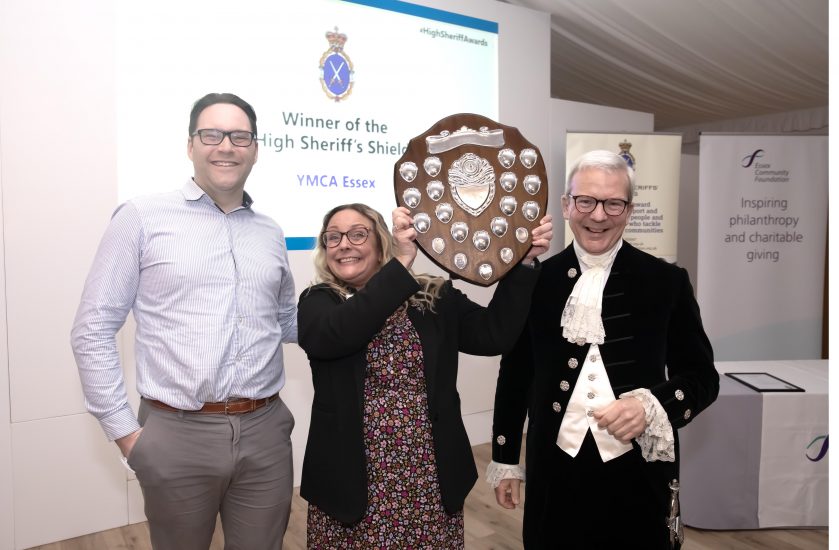
High Sheriff gives recognition to local charities
8th March 2024
Local charities and voluntary organisations that address crime and anti-social behaviour and improve community safety have received recognition and grants at the annual High Sheriff’s Awards.
Among the projects receiving support were a mobile youth club in South Essex, help for adults and young people who are homeless in Chelmsford and Colchester, a programme working with perpetrators and survivors of domestic abuse and knife crime prevention workshops.
Over 200 guests attended this year’s ceremony held at Hylands House in Chelmsford, where trophies, certificates and 25 grants totalling £38,000 were presented by the High Sheriff of Essex, Charles Bishop.
 The event was supported by Essex County Council, Chelmsford City Council and the Office of the Police, Fire and Crime Commissioner. BBC Essex also broadcast live from the venue. Presenters Steve Scruton compered the event and Ian Wyatt interviewed the trophy winners and other guests, with conversations aired live during the BBC evening show.
The grants came from the High Sheriffs’ Fund, which was established to give credit to local initiatives that address crime, community safety and anti-social behaviour, and is managed by the independent charitable trust Essex Community Foundation (ECF). On top of the £38,000 being presented from the High Sheriffs’ Fund, ECF will award an additional £146,000 to the charities from other funds under its management.
Charles Bishop, the 843rd High Sheriff of Essex, has travelled across the County during the year, visiting charities that are tackling a wide range of issues and helping people in their community. He has learned about their work and met with many volunteers, presenting them with certificates to recognise and acknowledge their commitment and dedication.
He said, “The rising cost-of-living is putting pressure on charities as they try to pay their bills, alongside an increasing demand for their services and support.
“The Awards event provides a wonderful opportunity for me, and other attendees, to recognise the significant contribution these organisations make in our communities. It is a privilege to be able to reward their outstanding work, and that of the wider voluntary sector, being undertaken in Essex that is helping to build and sustain safer communities”.
The coveted High Sheriff’s Shield was awarded to YMCA Essex in Colchester for their work helping young people aged 16-25, to develop their skills, potential and life chances. YMCA’s supported housing units provide a stable environment where they can engage tenants in a wide range of training so they can successfully move on to independent living. The organisation also received a grant of £2,000 from the High Sheriffs’ Fund to provide moving-in packs of essential items for former homeless young people who come to stay at the housing units.
Sophie Mattei, Head of Housing at YMCA Essex said, “We are absolutely thrilled to have been recognised for our work with young people and very grateful to have received a grant from the High Sheriffs’ Fund. At our housing project in Colchester, we house 44 young people aged between 16 and 25 who are homeless or vulnerably housed. They stay with us for up to two years and we work with them to develop the skills needed to live independent, fulfilling, and successful lives in the future.
“Often the young people come to us with only the clothes they are wearing, no bedding, cutlery, crockery or basic household equipment. The grant we have been given means we are able to buy all these things as well as place an air fryer, kettle, toaster and cleaning cloths and sprays in each room. Having a move in pack means the young people feel a sense of home as soon as they arrive, it builds trust and respect and helps them to believe we work with kindness at the forefront of all we do.
“To be recognised by the High Sheriff as a caring, forward thinking and inclusive organisation means a huge amount to us at YMCA Essex where staff work with compassion to empower the children, young people and their families to develop, grow and achieve their goals in life.”.
 Other trophies presented on the night were:
- The High Sheriff’s Cup, presented to the Aspirations Program for their work supporting women working in the sex industry in Southend. Aspirations work hard to build positive relationships with the women, to show they care about their safety and encourage them to feel secure enough to engage with their treatment, support and recovery services.
- The Essex County Council Bowl which recognises voluntary organisations that work in partnership to deliver programmes, was awarded to Sanctus, which is based in Chelmsford and delivers a range of support to homeless and vulnerable people, including 1-2-1 mentoring and counselling, working housing providers, mental health support and other local organisations.
- The Essex County Fire & Rescue Shield, which recognises an organisation’s work with young people, was awarded to Bar’n’Bus. They have delivered thousands of hours of community-based youth support across Basildon, Castle Point and Rochford and their mobile youth bus provides a safe space where young people can gather, access advice and socialise.
- The Essex Police Cup, was given to The Change Project, based in Chelmsford and is one of the few organisations in Essex specifically delivering programmes to work with both victims and perpetrators of domestic abuse and their families.
Since the High Sheriffs’ Fund came under ECF’s management in 1997 it has distributed grants totalling over £745,000.
Caroline Taylor, chief executive of ECF, said, “Successive High Sheriffs work hard to raise awareness of the voluntary sector in Essex. They also raise money for the High Sheriffs’ Fund, and we work with them to ensure that funding gets out to local charities that are working in the heart of their communities, so they can help tackle crime and safety issues”.
The office of High Sheriff is an independent non-political Royal appointment for a single year. The High Sheriff receives no expenses, and the role comes at no cost to the public purse.
Grants and Photos
To view a full list of Grants awarded this year from the High Sheriff’s Fund click here.
To view photos taken at the Awards click here.
To download and listen to the BBC interviews on the night click here.
.
Does your charity need funding? Apply to the Essex Fund
27th February 2024
Essex based charities are encouraged to apply now for financial support from the ‘Essex Fund’ to keep their services and projects running.
The Fund was set up by Essex County Council in 2000 to provide annual support to the voluntary and community sector in Essex and since then, has given out over £1.5 million in grants.
Organisations and projects that help unpaid carers, improve the environment or engage people in environmental projects, provide a community resource or activities that help young people, including arts, culture and heritage projects, are all eligible for consideration.
Groups can apply for up to £5,000 towards their core and operating expenditure, project costs or capital items.
Cllr Jill Reeves, Chair of Essex County Council, said: “The rising cost-of-living is continuing to be a challenge for local charities as they struggle to pay their bills and running costs, alongside many of them experiencing an increase in demand for their services.
“These groups provide vital services for people who need support. We encourage them to contact ECF to talk about their funding needs to continue their valuable work helping people in our local communities.”
Charitable activities that have received funding in previous years include interactive musical performances in care homes, mental health support for young people, and woodland well-being sessions for children with Down syndrome.
Andy Payne Worpole, Director of Policy and Programmes at ECF, said: “We are pleased to manage the Essex Fund and work with the decision-making panel at the council to get funding to where it is needed most.
“The panel are particularly interested in supporting smaller voluntary organisations and projects that are working in areas of deprivation where there is a lack of facilities.
“There is a short application form on our website and our friendly grants team are on hand to help on 01245 355947 or grants@essexcf.org.uk if you have any questions or want to discuss an idea. You can also contact us through our website or via social media.”
How to apply:
The deadline to apply to the Essex Fund has now closed. If you are in need of funding, please contact us using one of the options below:
- Chat with us instantly using the button in the bottom right hand corner (9am-4pm)
- Call us on 01245 355947
- Click here to book a time slot to speak with a grants officer
- E-mail grants@essexcf.org.uk
Caring for our communities
26th February 2024
Being a carer is a demanding and often exhausting role which many people take on with love and dedication, but in too many cases without much recognition.
It is estimated that in Essex there are more than 124,000 unpaid adult carers and 10,000 young carers, some barely of school age.
Recent research by Carers UK found that more than a quarter of unpaid carers report having bad or very bad mental health, with 82 percent of these reporting feelings of hopelessness.
Over the past two years we have awarded a total of £747,288 to organisations supporting carers and without this kind of help many would struggle to carry on.
The grants have given vital backing to a wide range of organisations helping carers of all ages in different ways. These include:
 Action for Family Carers (AfFC), established in Maldon in 1990, provides a unique “wrap round service” for families, offering a wide range of support for adult and young carers across Essex.
The organisation is facing an increasing demand for its work and aims to meet the health and well-being needs of carers by providing support for young carers, respite club nights and trips, counselling, day care, and activity groups. They also work with employers, GPs, and schools, to help them provide better support for carers.
A grant of £207,346 has been given to AfFC by ECF over three years to expand their Carer and Family Response Service in the Chelmsford district, to provide information and advice to the whole family and young carers experiencing healthcare, housing and wellbeing related issues.
James Clarke, CEO of AfFC said: “Some families need intensive support over a period of time, including help to get to the stage emotionally where they can accept advice or take practical steps, such as agreeing for care workers to attend. Our Family Support Worker can talk to social care and other agencies about the cared-for as well as the carer.
“Our ambition is to ensure that no carer or young carer is adversely impacted by their caring role. We help carers, young carers and families to have improved health and wellbeing, to have choices and to feel more in control.
“We help carers, young carers and families to have improved health and wellbeing, to have choices and to feel more in control.”
“This service is at the heart of our mission to achieve positive outcomes for all carers and their families, to be responsive to their needs and to do that independently of statutory services or particular service providers, including challenging poor practice where appropriate.”
 Kool Carers South East was founded in September 2017 by a now qualified social worker and an experienced youth worker. It focuses on supporting young people, who care and look after a member of their family who are sick, disabled, who have a mental health illness, or who may be misusing drugs or alcohol. The charity has seen a significant increase in the numbers of young carers and families that it supports.
Rachel Tungate, chief executive of Kool Carers said: “With so many adult responsibilities, young carers often miss out on opportunities to play and learn that other children and young people have. Many struggle educationally and are often bullied for being ‘different’. Many young carers become isolated with no relief from the responsibilities of caring and the pressures at home.
“As a result, many young carers will often lose their childhood. They are often afraid to seek help because they fear being separated from their families and taken into Local Authority care. As a result, many young carers are overlooked by society and will often fall below the professional radar. One of our key aims is to reduce the isolation that many experience, in order that every young carer has the opportunity to meet their full potential.”
Kool Carers provides a safe, professional and comfortable environment for young carers aged eight to 18, living in Basildon and Brentwood, to develop personal and social relationships, while improving independent life-skills and building their resilience, all of which helps to reduce isolation and enhance emotional wellbeing. Sessions are tailored to meet the needs and age group of young carers and the programmes are developed and designed with their input.
Grants from ECF have supported a wide range of projects provided by Kool Carers, including a counselling service, support for young carers groups in Basildon and Brentwood, the employment of a full-time family support worker, therapy following traumatic events, youth safety sessions and support work with the parents and carers of young carers, aimed at improving their own mental health and wellbeing.
“We couldn’t do this without the support from funders in the community, so thank you to all who care about our carers.”
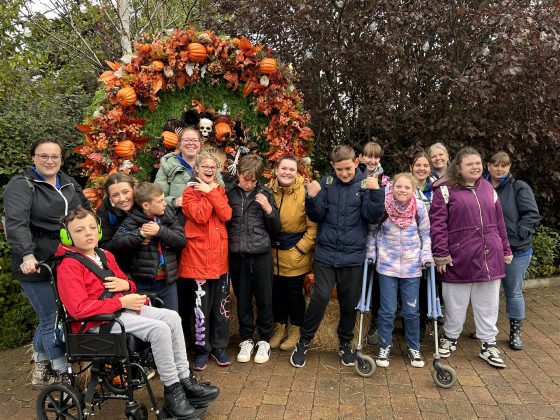 BOSP (Brighter Opportunities for Special People) is a small independent Essex based charity that has been supporting families for over 32 years.
BOSP’s vision is for children and young adults with complex disabilities or life limiting conditions, and their families, to live the best life possible.
The organisation’s mission is to improve the lives of children and young adults with complex disabilities or life-limiting conditions, and their families, by providing high quality, fun, educational activities, support and respite care.
BOSP offers children and young people with disabilities access to the same activities and opportunities as their peers, allowing them to develop independence, self-esteem and social skills in a supportive environment. This enables their families to have some much needed respite from their caring responsibilities, allowing time to catch up on much needed sleep, spend time with their other children or just have an undisturbed shower or cup of tea.
Jodie Connelly, Chief Executive of the Charity said: “Profound learning disabilities and critical illnesses blight young lives and put great stress on the family unit. Disabled and very ill children face discrimination and substantial barriers to participation in mainstream activities, resulting in the whole family becoming marginalised and vulnerable to depression, family breakdown and social exclusion.
We provide 17 different activities and support services, regularly supporting 110 local children and over 400 parents and siblings. For our parent carers and young carers, respite is not a nice to have, it is a need to have. For some of our families, they are looking after children with complex disabilities or life limiting illnesses 24/7.
Carers can feel very isolated as it is not always possible to just ask a friend or family member to step in to provide help. For them to continue their caring role and avoid burnout, they need regular breaks. BOSP’s crisis prevention support helps keep families together and children in their homes, but we couldn’t do this without the support from funders in the community, so thank you to all who care about our carers.”
Maypole House Charitable Fund
The Maypole House Charitable Fund was set up in 2001 by a group of parents in Uttlesford who had originally set up a charity called RESCU, through which they wanted to build a respite centre for local families who had children with disabilities.
It was to have been called Maypole House, but after many years of fundraising, the trustees of RESCU realised they were unlikely to be able to achieve their ambitions in the way they had originally hoped.
They took the decision to close the charity and transfer it to ECF. This has enabled them to put the money to use in a way that honours their original objectives and builds on all they had achieved.
In 2024, the Maypole House Charitable Fund will have given grants totalling £250,000 to charities in Essex providing essential respite for children and adults with disabilities and this will have benefitted more than 5,500 people.
Jill Elms was a trustee of RESCU. She remains involved with the Fund, working with ECF to agree grants. She said, “It was not easy to make the decision that building a respite care centre was no longer feasible or sustainable, but working with ECF meant that we could stay true to the spirit of our earlier aims and still support voluntary organisations giving respite to people who need it most, now and in the future.
“We are amazed by the amount we have been able to give away in grants and because the Fund is endowed with ECF, it will keep on supporting charities that are helping families and their children to have some much-needed respite.”
If you are interested in setting up a charitable fund to support your local community please contact Perry Norton at ECF on 01245 355947 perry@essexcf.org.uk.
When and How to Give
 Stewart Sanderson is an experienced leader and adviser within the UK Wealth Management sector. Stewart joined our board of trustees in November 2023, but he has been involved with ECF since 2010 when he was working for Coutts & Co and was based in Chelmsford.
Stewart is experienced in talking to clients about their wealth, planning and, where appropriate, discussing how they can give to charity during their lifetime or leave a lasting legacy to support causes that matter to them.
We asked him how he brings the subject of giving to charity into his conversations with clients, and he was pleased to share his thoughts with us below:
For us to manage wealth properly, it’s vital that we acknowledge that everyone is different and will have differing views on the question of “what actually is wealth?”.
We can debate for hours without agreement or consensus. Why? Well, for many people, it is not about money; it’s about motives, circumstances, and beliefs. These will be key drivers when looking deeper.
It’s a privilege to talk to people about their wealth, because while there are some fundamental questions about what they might have, what they want to do, and when, much of the interest is about the emotional side of their lives, not the money. I say that, as people care much more about family, about health, about being connected, seeing friends, having fun, and living, than they often do about financial risk, asset allocation or performance data.
Feelings matter, they are personal and it is why, when the planning is done, cashflows and plans built, there is a need to discuss what you need (mandatory – bills, the cost to survive), what you would like to do (discretionary – fun, the cost to live!) and increasingly, what do you want to be remembered for (legacy – gifting – leaving behind).
What do you want to be remembered for?
For many clients, business owners, or retirees, it is years, not money, that they will run out of first. This is a harsh reality, but as they discuss their future, such a revelation shifts the focus to “what do you want to be remembered for?”. In my experience, people are becoming more and more aware of the inequality of life, and with recent reminders such as Covid19 and the cost-of-living crisis impacting local communities, it has been brought to the fore. They realise they can help.
This is where advice, be it legal, tax, financial, investment or simply shared experiences can highlight the importance of donating to good causes. Helping others in your lifetime allows you to become “wealthier”, not in pounds and pence, but with fulfilment, satisfaction, and purpose, as you observe how your money can make an impact on the lives of so many.
We all do this already in a small way; most of us will sponsor somebody doing a marathon, have a regular donation to a charity they care for, attend or volunteer at local events, but this can be so much more and for those with savings accumulated over time, or proceeds from a corporate event or business sale, the UK government offers several tax breaks.
Why wait to give on your passing?
Donate now! It is removed from Inheritance Tax (charged at 40%) which itself can, with basic planning, be reduced to 36% in your lifetime or through legacies in your will. Charities are eligible for Gift Aid; this increases your donation and allows them to ordinarily claim an extra 25p for every £1 that you give. For higher rate taxpayers there’s more, as you can claim back the difference between the tax you’ve paid on the donation and what the charity got back. It’s not the deciding factor, but it is very efficient.
This article is not about tax planning, but there are several allowances that make the concept of giving away wealth to charity more and more compelling. For example, that could be saving Capital Gains Tax, or donating assets that are of value, but not in liquid form e.g. land, property.
So, how do you choose who to support?
With over 150,000 registered charities in the UK alone, and so many deserving causes, it can be a minefield. But why take on that burden? Organisations like Essex Community Foundation exist to support local people, assist local charities, and make a difference in their community. They remove the administration and governance worries, giving donors time to engage with local causes, learn about issues and, if they wish, retain anonymity. Why not work alongside professionals to help you deliver your charitable wishes?
The role of an adviser is, in part, to help you understand the power of the possible. Knowing you have a plan to provide what you need, (plus what you want); it means time and effort can be diverted to the more interesting topics. Avoid endless reviews of data, performance, risk and reward, but spend the time focused on things that really interest you. Many of us have a passion to make a difference and support our community; some through offering time, some their expertise and for others, they can use money. This is why there is a real rise in philanthropy and giving while living, as younger donors and fund holders share lived experiences of doing this, increasing their personal wealth as they see and feel first-hand the impact it has on the lives of others.
Wealth advisers should always speak to their clients about charitable giving. Many clients are already charitably minded and set up foundations or are involved in charities during their lifetime while others, once they have understood the benefits of charitable giving and related tax benefits, can be encouraged to donate when otherwise they might not. As wealth within families is passed through generations, more and more want to be ethical and responsible. Thinking beyond the numbers only adds to what it means to be wealthy.
Talk to your adviser and make a lasting difference
Charitable giving is undoubtedly an opportunity for you and your adviser to interact on a much more personal level, allowing you to prioritise and implement your objectives. You have enough, the plan shows that; this is about enriching the remaining wealth to mitigate tax, create legacies, educate future generations, and make a lasting difference to others.
Experience suggests achieving philanthropic goals will only add to your personal wealth.
You can find out more on our website about setting up a charitable fund, leaving a legacy or simply just leaving a lasting gift to your community. Alternatively, please call Perry Norton, Head of Development, on 01245 355947 to have a conversation.
The heat is on at the Harwich Museum
Visitors to Harwich Museum are set for a warm welcome thanks to a funding boost that will enable them to buy six eco-friendly heaters.
The funding comes from the Milsom Charitable Fund which is managed by the independent charitable trust, Essex Community Foundation (ECF).
Paul Milsom, Managing Director of the Milsoms Group said, “We have a strong presence in Harwich through our business at The Pier and we are committed to supporting local charities in the area through our fund with ECF.
“We know how valuable the museum is to the local community and we are pleased to help make it a warm and welcoming place where for people of all ages can visit and learn about the history of Harwich.”
Harwich Museum was established in 2020 and is dedicated to preserving the history of events, and the celebration of lives and businesses of people living in the local area of Harwich and Dovercourt spanning different generations.
Events and talks on different historical subjects and a range of topics are organised throughout the year and, as well as being open to the public, the museum also serves as a place of learning for local primary schools and a hub for clubs including the Scouts, Beavers and Cubs. The museum is run by a team of dedicated and enthusiastic volunteers and is open to the public five days a week so that people can access the exhibition area, galleries, library, lecture room, and archives.
Steve Delves is a trustee of the museum. He said, “We are extremely grateful for this funding that will enable us to buy some heaters. It will make such a difference for our volunteers and visitors.
“Being located near to the sea front, we are susceptible to very cold offshore winds which makes it difficult to keep the building warm, especially in the Winter. We have been using some plug-in heaters, but they are expensive to run and not very effective.”.
Steve hopes that having the new heaters will encourage more people to come into the Museum to enjoy the exhibits and help generate some much-needed funding.
“We have some great exhibits and local history information available. Having additional heaters in our reception and public areas will hopefully create a warm and welcoming space that will encourage more people to visit, stay for a chat, a look around the gift shop and enjoy a drink in the Lighthouse tea bar.”
The Milsom Charitable Fund was set up in 2005 by Paul and Geraldine Milsom after Paul’s father Gerald died. Gerald was a larger-than-life character and he was a great supporter of charitable activity. Paul and Geraldine are carrying on his legacy through their Fund with ECF, supporting voluntary and community organisations in Essex, with a preference for supporting projects in Harwich. Since the Fund was set up it has given grants to charities totalling nearly £34,000.
To find out more about setting up a charitable fund in your name or, if you are a charity or voluntary group, how to apply for a grant, visit essexcommunityfoundation.org.uk or call us on 01245 355947.
How can tax reliefs enhance your charitable giving?
 We are pleased to work with many professional advisors in Essex, to help their clients support their local communities during their lifetime and as part of their estate planning.
Richard Harvey is a chartered accountant, tax Advisor and long-time supporter of ECF. During his career, Richard provided tax advice to a wide range of people and businesses.
Having retired from full-time practice a few years ago, Richard remains a consultant for a number of long-standing clients.
Here, we ask Richard to explain the different tax reliefs there are and how they can help enhance your charitable giving.
Gift Aid
Probably the best-known relief is Gift Aid which enables charities to obtain extra money in respect of your donation without it costing you a penny more. To make a Gift Aid donation, you need to be a UK taxpayer. Your donation is treated as if basic rate income tax has been deducted and charities can reclaim that tax from HMRC.
For example, on a donation of £10,000, ECF can claim £2,500 in Gift Aid from HMRC, meaning your total gift will be £12,500.
Tax relief for higher rate taxpayers
If you pay higher rate tax, you can claim back the difference between the higher rates of tax (40% or 45%) and the basic rate (20%) on the total value of the donation.
For example, if you pay 40% tax, a donation of £10,000 allows you to recover £2,500, so the donation costs you only £7,500 net, but ECF receives £12,500. If you pay 45% tax, a donation of £10,000 allows you to recover £3,125, so the donation costs you only £6,875 net, but ECF receives £12,500.
There are restrictions which apply to Gift Aid donations and some of these are summarised below:
- A donor needs to have sufficient income in charge to tax to cover the total of the donation and the Gift Aid relief. If not, they may be liable to pay all or part of the Gift Aid relief to HMRC.
- Relief will not be available if a donor passes on funds from sponsored challenges eg. overseas treks. The sponsors should gift directly to the sponsored charity.
A donor may elect for a qualifying donation to be treated as having been made in the previous tax year. This may be beneficial if the donor was paying tax at a higher rate in that year or wants to get the relief earlier.
Gifts of assets
Individuals can get income tax relief on gifts of certain assets to charity. This relief is in addition to the capital gains tax relief on gifts of assets to charity (see below). The relief applies if you give, or sell at below market value, qualifying investments to a UK charity.
Qualifying investments include listed shares and securities (including AIM shares), units in an authorised unit trust, shares in an OEIC, an interest in an offshore fund and UK property.
For an individual this reduces their total income tax liability, so a top rate taxpayer will secure 45 per cent tax relief on the value passed to the charity.
Additionally, gifts to charity are not subject to capital gains tax. A donor would not, therefore, be required to pay capital gains tax on the value of the donation and this represents a potential saving of up to 28% per cent.
Giving in your will
If your estate is liable to inheritance tax, you could choose to leave money to charity to reduce the overall amount of tax due from your estate as bequests to charity are exempt from inheritance tax. Gifts made to a UK charity in the seven years prior to your death are also covered by the same exemption from inheritance tax.
If you make a gift in your will to charity of at least 10% of your net estate, the rate of inheritance tax due on the taxable part of the estate is reduced from 40% to 36%. A gift of 10% of the estate to charity can leave the same amount available to your other beneficiaries as one of 4%. Any gift greater than 4% but less than 10% results in your beneficiaries receiving less money than they would have done if the gift was for 10%.
Advice on obtaining tax relief
Your professional advisor should be able to assist you on the tax implications of any gift you are considering. If this is not the case, then we may be able to provide the names of local firms who could do so as we are unable to provide such advice.
We welcome the opportunity to talk to you, or your professional advisor, about how we may be able to work together to achieve your charitable wishes. Please call Perry Norton on 01245 355947 or e-mail perry@essexcf.org.uk