


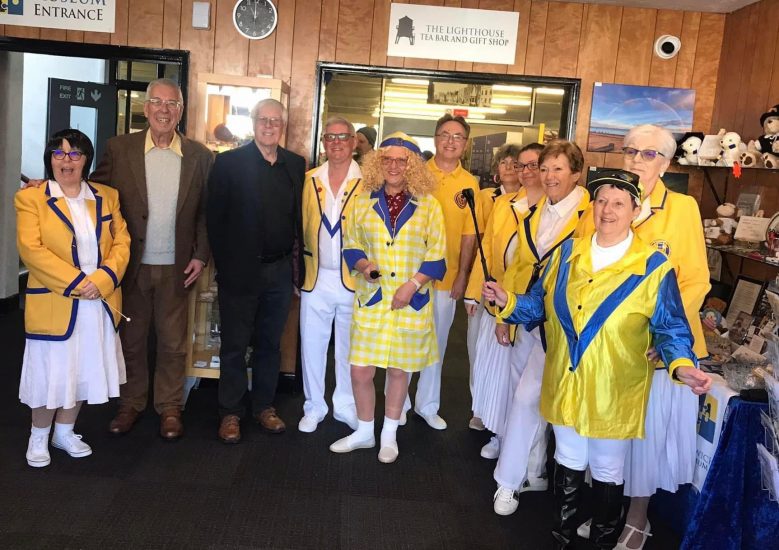
The heat is on at the Harwich Museum
26th February 2024
Visitors to Harwich Museum are set for a warm welcome thanks to a funding boost that will enable them to buy six eco-friendly heaters.
The funding comes from the Milsom Charitable Fund which is managed by the independent charitable trust, Essex Community Foundation (ECF).
Paul Milsom, Managing Director of the Milsoms Group said, “We have a strong presence in Harwich through our business at The Pier and we are committed to supporting local charities in the area through our fund with ECF.
“We know how valuable the museum is to the local community and we are pleased to help make it a warm and welcoming place where for people of all ages can visit and learn about the history of Harwich.”
Harwich Museum was established in 2020 and is dedicated to preserving the history of events, and the celebration of lives and businesses of people living in the local area of Harwich and Dovercourt spanning different generations.
Events and talks on different historical subjects and a range of topics are organised throughout the year and, as well as being open to the public, the museum also serves as a place of learning for local primary schools and a hub for clubs including the Scouts, Beavers and Cubs. The museum is run by a team of dedicated and enthusiastic volunteers and is open to the public five days a week so that people can access the exhibition area, galleries, library, lecture room, and archives.
Steve Delves is a trustee of the museum. He said, “We are extremely grateful for this funding that will enable us to buy some heaters. It will make such a difference for our volunteers and visitors.
“Being located near to the sea front, we are susceptible to very cold offshore winds which makes it difficult to keep the building warm, especially in the Winter. We have been using some plug-in heaters, but they are expensive to run and not very effective.”.
Steve hopes that having the new heaters will encourage more people to come into the Museum to enjoy the exhibits and help generate some much-needed funding.
“We have some great exhibits and local history information available. Having additional heaters in our reception and public areas will hopefully create a warm and welcoming space that will encourage more people to visit, stay for a chat, a look around the gift shop and enjoy a drink in the Lighthouse tea bar.”
The Milsom Charitable Fund was set up in 2005 by Paul and Geraldine Milsom after Paul’s father Gerald died. Gerald was a larger-than-life character and he was a great supporter of charitable activity. Paul and Geraldine are carrying on his legacy through their Fund with ECF, supporting voluntary and community organisations in Essex, with a preference for supporting projects in Harwich. Since the Fund was set up it has given grants to charities totalling nearly £34,000.
To find out more about setting up a charitable fund in your name or, if you are a charity or voluntary group, how to apply for a grant, visit essexcommunityfoundation.org.uk or call us on 01245 355947.
How can tax reliefs enhance your charitable giving?
 We are pleased to work with many professional advisors in Essex, to help their clients support their local communities during their lifetime and as part of their estate planning.
Richard Harvey is a chartered accountant, tax Advisor and long-time supporter of ECF. During his career, Richard provided tax advice to a wide range of people and businesses.
Having retired from full-time practice a few years ago, Richard remains a consultant for a number of long-standing clients.
Here, we ask Richard to explain the different tax reliefs there are and how they can help enhance your charitable giving.
Gift Aid
Probably the best-known relief is Gift Aid which enables charities to obtain extra money in respect of your donation without it costing you a penny more. To make a Gift Aid donation, you need to be a UK taxpayer. Your donation is treated as if basic rate income tax has been deducted and charities can reclaim that tax from HMRC.
For example, on a donation of £10,000, ECF can claim £2,500 in Gift Aid from HMRC, meaning your total gift will be £12,500.
Tax relief for higher rate taxpayers
If you pay higher rate tax, you can claim back the difference between the higher rates of tax (40% or 45%) and the basic rate (20%) on the total value of the donation.
For example, if you pay 40% tax, a donation of £10,000 allows you to recover £2,500, so the donation costs you only £7,500 net, but ECF receives £12,500. If you pay 45% tax, a donation of £10,000 allows you to recover £3,125, so the donation costs you only £6,875 net, but ECF receives £12,500.
There are restrictions which apply to Gift Aid donations and some of these are summarised below:
- A donor needs to have sufficient income in charge to tax to cover the total of the donation and the Gift Aid relief. If not, they may be liable to pay all or part of the Gift Aid relief to HMRC.
- Relief will not be available if a donor passes on funds from sponsored challenges eg. overseas treks. The sponsors should gift directly to the sponsored charity.
A donor may elect for a qualifying donation to be treated as having been made in the previous tax year. This may be beneficial if the donor was paying tax at a higher rate in that year or wants to get the relief earlier.
Gifts of assets
Individuals can get income tax relief on gifts of certain assets to charity. This relief is in addition to the capital gains tax relief on gifts of assets to charity (see below). The relief applies if you give, or sell at below market value, qualifying investments to a UK charity.
Qualifying investments include listed shares and securities (including AIM shares), units in an authorised unit trust, shares in an OEIC, an interest in an offshore fund and UK property.
For an individual this reduces their total income tax liability, so a top rate taxpayer will secure 45 per cent tax relief on the value passed to the charity.
Additionally, gifts to charity are not subject to capital gains tax. A donor would not, therefore, be required to pay capital gains tax on the value of the donation and this represents a potential saving of up to 28% per cent.
Giving in your will
If your estate is liable to inheritance tax, you could choose to leave money to charity to reduce the overall amount of tax due from your estate as bequests to charity are exempt from inheritance tax. Gifts made to a UK charity in the seven years prior to your death are also covered by the same exemption from inheritance tax.
If you make a gift in your will to charity of at least 10% of your net estate, the rate of inheritance tax due on the taxable part of the estate is reduced from 40% to 36%. A gift of 10% of the estate to charity can leave the same amount available to your other beneficiaries as one of 4%. Any gift greater than 4% but less than 10% results in your beneficiaries receiving less money than they would have done if the gift was for 10%.
Advice on obtaining tax relief
Your professional advisor should be able to assist you on the tax implications of any gift you are considering. If this is not the case, then we may be able to provide the names of local firms who could do so as we are unable to provide such advice.
We welcome the opportunity to talk to you, or your professional advisor, about how we may be able to work together to achieve your charitable wishes. Please call Perry Norton on 01245 355947 or e-mail perry@essexcf.org.uk
Give a little help this Winter
24th January 2024
Charities, voluntary and community groups across Essex continue to be affected by the cost-of-living crisis, with tight budgets and a rising demand for support. More people than ever have become food insecure or fallen into fuel poverty, and the recent cold snap has further tested their resilience.
Some people, especially those who are elderly or vulnerable, will be making a choice between turning their heating on or buying food, and for people with mobility issues, the Winter months can cause additional stress and feelings of isolation.
Our Surviving Winter Appeal is helping local charities to provide support, warm spaces, and welcoming environments where people can meet, talk about their worries, and get help if needed.
We recently gave a grant of £2,500 to Voluntary Action Epping Forest (VAEF) who are helping residents to get through the Winter months, particularly those who are housebound or struggling.
Jacqui Foile, CEO of VAEF said, “Our Benefit Advice Service is vital in helping many elderly and vulnerable people who are struggling with rising costs and high energy bills. The anxiety and worry, combined with feelings of isolation or not knowing where to turn for help, can have a devastating effect on their health and wellbeing.
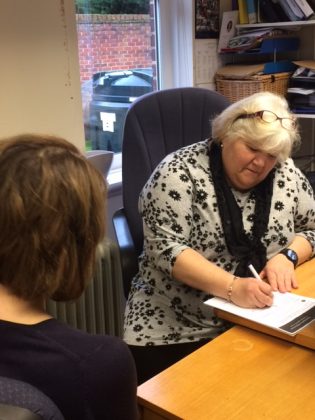
“Our team is there to listen and give information and advice. The funding from ECF will enable us to continue this service for residents, including home visits to those who are housebound, helping them to access the benefits they are entitled to.”
Since 2015, VAEF’s Benefit Advice Service has supported over 1,500 clients and referrals are growing at an accelerated pace and has facilitated benefits for residents totalling £2.1m each year.
Support our Surviving Winter Appeal
Our ‘Surviving Winter Appeal’ is one way of supporting vulnerable people in local communities. Since the annual Appeal was first launched in 2011, we have given over £100,000 of support to local charities and voluntary groups.
The Appeal invites donations to raise vital funds that can be used to support older and vulnerable people, keeping them healthy and well during the colder months.
Andy Payne Worpole, head of programmes at ECF, said: “The Winter can be a difficult and dangerous time for older people, but also for those who are vulnerable due to issues including homelessness, disability or illness.
Local charities and voluntary groups can provide a lifeline of support, but the rising cost of living, increased food prices and energy bills is making it difficult for them to continue providing their vital services.
“But, you can help! All donations to our Surviving Winter Appeal will enable us to support local voluntary organisations and activities to help reduce loneliness and isolation, contribute to fuel and food costs, and assist those in need to get access to specialist services and community groups.
“If you receive the Winter Fuel Allowance or the Energy Rebate and don’t need it to pay your own bills, please consider donating some or all of this to our Appeal.
How you can help
- Donate your winter fuel payment if you don’t need it
- Give a one-off donation
- Set up a regular monthly gift
- Give online here
Cheques can be sent to the Essex Community Foundation offices: 3 Hoffmanns Way, Chelmsford, CM1 1GU. To ask questions about the Appeal and other ways to make a donation, please call us on 01245 355947.
Does your charity need funding this Winter?
If you are a local charity or community group that needs funding to support your work during the colder months, including core costs (such as rent and salaries), please call our grants team on 01245 355947.
Heart of the County
12th January 2024
After the indulgence of Christmas and New Year festivities, our thoughts often turn to adopting a healthier lifestyle.
Heart conditions are all too common, affecting thousands of people across Essex, but a charitable fund launched by two of the county’s top cardiologists and a charity specialist is helping to save lives and provide vital support.
The Essex Heart Fund has a unique mission, to raise money in Essex and ensure that it is only spent on cardiac services in the county, ranging from providing support in the community for cardiac patients, contributing to the cost of installing defibrillators in village locations, through to new clinical treatments for patients and carrying out ground-breaking research.
The fund was established with ECF and launched in 2020 by renowned consultant cardiologists, Dr Gerald Clesham and Dr Thomas Keeble, along with charity specialist Fred Heddell. Dr Clesham and Dr Keeble both work at hospitals in Essex and Fred has wide experience of the charity sector in the county.
Between them they identified needs and developed the idea for a new charity in Essex, with the aim of bringing major improvements to the lives of Essex heart patients and their families.
Their vision has become a reality and the Essex Heart Fund is already having a positive impact.
Money donated to the Essex Heart Fund is spent solely in the county, on community services and support groups for patients and their families, the development of new hospital-based clinical services and to support local cardiovascular education and research.
Dr Clesham, who works at Broomfield Hospital in Chelmsford and at the Essex Cardiothoracic Centre in Basildon, said: “Heart conditions are still the commonest causes of premature death and are a major cause of disability. Our cardiac services here in Essex serve a population of about 1.8 million people and we are fortunate to have the internationally recognised Essex Cardiothoracic Centre in Basildon, along with some great work going on in our other hospitals the county.
“Most of us know someone, maybe a family member, friend or acquaintance, who has been affected by a heart condition. We were always aware that the people of Essex are very generous and like to donate to heart charities.
“But we also know that only a tiny fraction of the money donated to national heart charities finds its way back to Essex and that people who give money in this way haven’t seen the benefits locally.
Our key message is that the Essex Heart Fund was established to raise charitable funds for cardiac care in Essex and to make sure that the money is spent in Essex.
“We are confident that channelling more money into local services will result in an improved outcome for heart patients. Even modest amounts given as a donation will be highly beneficial.”
Grants from the fund have already made a difference, including support for the Tickers Cardiac Support Group to help provide cardiac fitness training for heart attack survivors at a venue in Chelmsford.
The Fund has also enabled defibrillators to be installed at Essex locations, including former telephone kiosks in Terling, Fairstead and Audley End. A training defibrillator has also been provided for Essex Community First Aid, whose volunteers give first aid cover at community events across Essex. A grant was also given to Little Yeldham, Tilbury-Juxta-Clare and Ovington Parish Council for a heated defibrillator cabinet for the three villages.
Ongoing research is so important to develop new treatments for cardiac patients and the Fund has already given support to the research and development department at Basildon University Hospital.
Dr Clesham said: “The Essex Heart Fund will help us develop some new ways of treating people with high blood pressure and new techniques for dealing with heart attacks. Support from the fund will allow pilot projects such as these to be carried out and, when they are established and proved to be a success, they can be incorporated into a range of NHS treatments, which could really make a difference to patients.”
Dr Clesham, who has been a consultant in Essex for 20 years, said that, historically, the county’s cardiac services were not at the standard they have achieved today. Other areas were given greater priority for NHS funding as Essex was not seen as an area of deprivation.
“Until 20 years ago nothing was well developed here in terms of cardiac care. We lacked the medical school and specialist services that we have today, and staff wanted to work in London rather than Essex,” he said.
“Now the tide is turning, and we are seeing that staff want to leave London and come to Essex. A lot of effort was put into creating our specialist services and they are now recognised nationally.
“When we started the Essex Heart Fund, we decided we wanted to take cardiac care into the community. We know that supporting patients in the community means that they could spend less time in hospital. When patients are discharged from hospital, they often have questions they would like to ask, but don’t know who to talk to. Providing a support system, where nurses can phone patients and give advice, will help patients and they will know that someone is looking out for them.
“Helping patients in the community is a very effective way of keeping people well and the Essex Heart Fund will help cardiac patient support groups develop in Essex. Being able to meet with other people who have been through the same sort of illness can be a wonderful source of support. I am always happy, so is Dr Keeble, to visit such groups, give talks and to give support where new groups are being set up.
“We hope it will also work both ways, as we would like to hear from patients and their families about their views on local cardiac services. We are always open to being approached, it might be a group wanting help to hire a hall for a meeting or presentation, or patients telling us the things they would like to see as part of our services.
“Locally based research and training are also very important aspects for the fund, because if patients go into hospitals where these two things are carried out, their survival rate is a lot better. It also helps us to recruit and retain staff.
“The new clinical services we will be able to develop will also be so valuable in this area. It can take time to develop such services and the fund will give us the freedom to be able to do this.”
Dr Clesham and Dr Keeble (pictured), who works at Southend Hospital and the Cardiothoracic Centre in Basildon, will be active in the Essex community to promote the fund and provide education about heart health.
“The Essex Heart Fund has its own identity, and working with Essex Community Foundation was the best decision we ever made,” said Dr Clesham.
“We run a lean operation, with minimal expenses and ECF provides the independence and the relevant charity governance, which leaves us free to concentrate on the areas we want to support.
“There is a lot of goodwill out there in Essex and I am very optimistic about the future of the fund. Our main aim now is to build awareness, so that the generous people of Essex know that we are here.”
Did you Know?
- 7,500 heart procedures are performed every year at the Essex Cardiothoracic Centre
- In Essex someone dies of heart disease every two hours
- 20,000 people in Essex have heart failure
It is easy to make a donation and lots of ways that you can give support:
- Donate online via essexheartfund.org.uk
- Include EHF in your will
- Choose EHF as your charity to support if you take part in a fundraising event or nominate EHF as your corporate charity of the year.
- Organise an event in aid of EHF
Recognition for a Countryside Champion
8th January 2024
We are delighted that our Vice President, Robert Erith TD DL has been awarded a British Empire Medal in the New Year’s Honours List “For services to the Environment in Dedham Vale in Essex and Suffolk”.
Robert was a founding Trustee of Essex Community Foundation (ECF) in 1996, and his experience was of great value in helping to raise awareness of ECF which offered people and businesses a new way of giving to support local charities in Essex.
He was also a High Sheriff of Essex in 1997/98 and he was instrumental in setting up the High Sheriff’s Fund with ECF, with support from past and future High Sheriffs at the time. The Fund now has an endowed value of around £510,000 and has given away grants totaling nearly £710,000 to a wide range of charities whose work is contributing to community safety in Essex.
Robert has a deep appreciation of nature and a passion for the environment. He is President of the Dedham Vale Society, and for 11 years was Chair of the Dedham Vale and Stour Valley Partnership between local authorities, government agencies, national organisations and local people. The aim of this partnership is to conserve and enhance the special qualities of the area.
This award is very well deserved, but as always, Robert is modest in accepting it. He said, “I have enjoyed giving my time to help protect such an important and historical area on the Essex/Suffolk border that is enjoyed by so many people. I am thrilled to receive this award, but there are many other people and volunteers involved in protecting and maintaining this wonderful area of outstanding natural beauty. I hope my award reflects the contribution of them all.”
Robert is also strongly committed to supporting his local community in the village of Lamarsh where he lives. In 2018 he was instrumental in securing the future of The Lamarsh Lion, which is now a thriving community owned pub.
Congratulations Robert!
Giving is not just for Christmas
3rd December 2023
The joy of giving is synonymous with Christmas, but there are gifts that can have an impact long after the festive season has finished and the decorations are packed away.
Giving is at the heart of our work and every year we give around £4.5 million in grants to local charities and voluntary groups. The funding makes a huge difference to the health and happiness of people in Essex, providing vital support to a wide range of local organisations working at the grassroots of our communities.
Currently, we manage around 180 charitable funds on behalf of generous individuals, families and businesses. Many of the people and organisations who have established funds with us have all had the satisfaction of knowing that their charitable wishes will be carried out, with every safeguard in place, to ensure that their money will be given wisely and used effectively.
Some funds are established as a way of leaving a legacy and if appropriate, can be set up within someone’s lifetime, rather than after they have died. Professional advisers, including solicitors, can work with their clients to advise them on how giving through us can be tax efficient and means that their gift will support causes close to their heart, in perpetuity.
Here are two stories of people who were introduced to us by their solicitor, Fiona Ashworth, director at Thompson Smith and Puxon (TSP) Solicitors and head of their wills and estates team.
Leaving a lasting legacy
Before Barbara Huntley died in 2022, aged 89, she had conversations with her solicitor and decided that her legacy would be to set up a fund with ECF to support charities helping children, especially those of pre-school age.
Barbara, who lived in Boreham, was born in Hornchurch and lived in Barkingside and South Woodford. In her early 30s she went to work for Pember and Boyle in London as a stockbrokers’ clerk. It was during her time there that she met Stan Huntley, a stockbrokers ‘ messenger, and they married in 1991.
Sadly, Stan died in 1998 and although he had children from a previous marriage, Barbara did not have her own biological children. Following discussions with her solicitor, Barbara decided that, after making some provisions for members of the family, her residuary estate would be used to set up a fund in her name with ECF.
Fiona Ashworth said: “Barbara always enjoyed life. Even in her older years she had a great sense of humour and was such good fun to be with. She exuded warmth and calm and people just gravitated towards her. I am pleased that after making provision for members of her family, the residuary of her estate, donated to ECF, will ensure that local charities continue to benefit from her generosity.”
Supporting causes that matter to you
Another fund set up as a result of someone’s foresight before they died to help others, was a legacy left by Dr Geoffrey Sneed.
Geoffrey lived in Ilford, in the house his parents had bought and where he grew up. He was a clever student with an aptitude for maths, science and engineering. After graduating from Imperial College, London, he continued his studies with a PhD. He went on to teach physics, maths, chemistry and applied sciences at Ealing High School for 15 years and pioneered the teaching of the latter at sixth form level by helping to create the first purpose-built laboratory and unique experimental equipment installed in a state grammar school.
He was also a research director at the University of Surrey and held appointments at the Science Museum and Imperial College. In 1979 he was awarded a Churchill Fellowship by The Winston Churchill Memorial Trust and with this he travelled all over the world, studying the teaching of science.
Among Geoffrey’s notable achievements was inventing a Pulsometer which was much needed in the medical world and is still in use today. He also formed the Molecule Club, through which many schoolchildren were brought to the Mermaid Theatre in London to see a musical show covering scientific principles. The show also travelled in a caravan to schools in the Midlands.
Cars held a special place in Geoffrey’s heart and he was associated with the motor industry all his life, using his knowledge of science and engineering to write many books on motoring, its history and inventions. His pride and joy was a red 1969 Morris Oxford, which he drove off the assembly line and meticulously maintained throughout his life.
Geoffrey had no family to leave his estate to. Given his significant contribution to learning and education, it is no surprise that when his solicitor proposed the idea of setting up a charitable fund with ECF called is the Dr Geoffrey Sneed Engineering Fund to support the education of young people in the subjects that he was so passionate about, Geoffrey agreed without hesitation.
Fiona Ashworth was Geoffrey’s solicitor for many years. She said: “When talking to my clients about their estate planning, we discuss any charitable interests they may have. If it is appropriate, I am always pleased to suggest including ECF as a beneficiary. In my view, they are best placed to continue the wishes of my clients after they have died. This provides a lot of comfort for my clients, knowing they will continue to help others after their death”.
Caroline Taylor, chief executive of ECF said: “We know that most people are incredibly generous with whatever resources they have, and we are so grateful to all our fundholders and people who make donations of any amount to help others.
“As grant-makers, we could always give more, which is why we work hard to encourage people to give back to Essex.
“It can be so satisfying to take that step during your lifetime, to experience the joy of giving, rather than leaving it until it is too late. But we all know how important it is to write a will. Including ECF as a beneficiary is a meaningful way to leave a lasting legacy to support the causes that are important to you.
“A good place to start is by talking to your professional adviser, or we would be happy to talk through your ideas with you.”
- It is estimated that of the 75% of people who give to charity in their lifetime, only 7% leave a gift to charity in their will.
- By leaving 10% of your estate to charity, you will benefit from a reduction in Inheritance Tax from 40% to 36%.
Types of Legacy
- A residuary legacy: a gift made form the remainder of your estate once all other bequests to family and friends have been ade and debts paid off. This can be a percentage of the remainder, or all of it
- A pecuniary legacy: a fixed amount specified in a will
- A specific legacy: a particular item left as a gift in your will, for example, shares, property, jewellery or a painting
- A reversionary legacy: this allows the surviving partner to benefit from the estate during their lifetime and then for the balance of the estate to pass to the Foundation
If you want to make a lasting difference in Essex, we have different options that will make it easy for you. Contact Perry Norton on 01245 355947 to have a conversation.