


Putting mind over matter and helping others
25th February 2025
Aron Priest’s experiences in life have encompassed great heights and the deepest depths. He left school without qualifications, took an apprenticeship as a printer and went on to become a self-made millionaire, after selling his pioneering online printing business.
A cycling accident resulted in one of his most difficult challenges, dealing with post-traumatic stress disorder. However, his determination to help others led to one his most rewarding steps, the launch of a charitable fund, The Priest Foundation.
The fund is managed by us and we help Aron achieve his charitable ambitions by giving grants to voluntary and community groups working in Southend-on-Sea and Rochford districts, that provide vital support in their local community and help a wide range of people, including young people aged 16-25 and those who are struggling with their mental health.
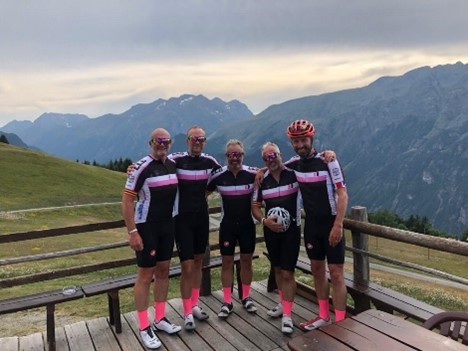
Aron has already cycled across the Alps to raise money for his Foundation and has now taken on the challenge of running the London Marathon in 2025.
Aron has joined the growing list of philanthropists who have set up charitable funds with us to give back to the community where they have strong business and family connections.
From an early age Aron, who lives in Rayleigh, showed his entrepreneurial and hard-working nature. He grew up in Hullbridge and attended The Park School in Rayleigh, leaving in 1988.
He said: “I had various jobs while I was at school, including paper boy, milkman and greengrocer. I had a decision to make about my future when I left school, as my grades really were not great.
“I chose to go into printing, as my Grandad was a printer and so was my dad. I had a look through the Yellow Pages listings and ran all the printing companies from ‘A’ onwards. I got to ‘D’ and I managed to get myself an interview with a company called Dellprint.
“I got the job, but the wage was only £50 a week, so I went home and spoke to my dad. I was on £90 a week as a greengrocer at the time, but my dad immediately told me to go with the printing apprenticeship. So, at the age of 16, I started my five-year apprenticeship. When I finished, I was still on £50 a week, so I moved on soon afterwards.
“I had a burning desire to work for myself and in 2000 I opened a company called ACP Print. I met my business partner Andy Smith shortly after that and we joined forces, trading as Solopress.
“We went online in 2005 which propelled us into a new stratosphere. In 2017 we negotiated a deal with a large group called Online Printers. When we sold, we had 350 employees and were turning over £31 million, the timing couldn’t have been better.
“I wanted to give something back to the industry and started leading tours at the great Stationers Hall in London which gives people an insight into the history of print. I have also volunteered in schools to help mentor young people, to let them know that if you are not academic there are other options, such as apprenticeships.”
In 2018 Aron was made a Freeman of the City of London to mark his outstanding 30-year contribution to the printing industry.
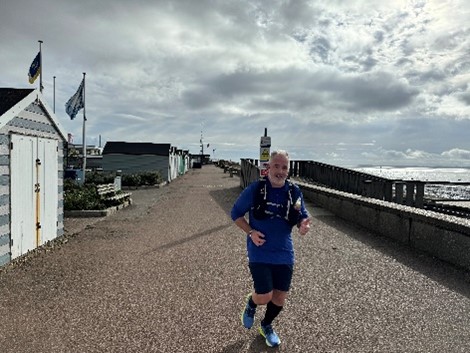
Never one to remain static, Aron has now added more strings to his bow by becoming a beekeeper, a property developer and a fledgling DJ, and he is now training hard for the Marathon which he hopes will raise money for his charitable fund.
He said: “My involvement with ECF came about because of my own experiences. In 2014 I had an accident on my road bike during a race. Afterwards I was diagnosed PTSD, I had no idea what that was.
“I struggled being around lots of people and felt very depressed, something I had never believed in. Fortunately, I had private health insurance to get the support I needed and with the help of my family and exercise, I got myself back on track.
“I realised there are many people out there suffering in silence with their mental health, so in 2019 I decided I wanted to give something back and started The Priest Foundation. I set up the fund with ECF because they do all the administration, which allows me, my family and friends to concentrate on fundraising. I find visiting some of the charities we have supported very rewarding and it is amazing to see at first hand the difference the grants make. It is good to know that the fund has longevity and will carry on into the future.
“All requests for grants come through ECF and my wife Lee and our children Ella, who is 23 and Macie, aged 18, are all involved in making decisions about which ones to support.
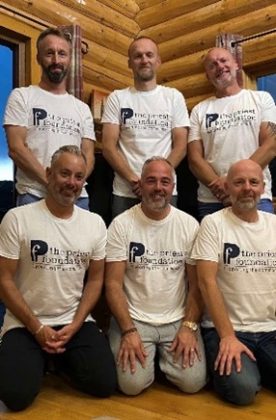
Aron, (front and centre) and friends proudly wearing their Priest Foundation T-shirts.
“I am always thinking of new ways to raise money as the more we have in the foundation, the more people we can help to get on the right road to recovery.”
Charities that have already benefited from support include:
- ATF Southend uses sports, activities, enrichment experiences and events to help children, young people and adults, build trust, gain confidence and access volunteering and employment opportunities. The Priest Foundation gave £827 to ATF for them to deliver sport-based sessions to young people who have been sectioned and are currently on a mental health ward in Rochford and Colchester.
- Bar’n’Bus received £1,040 to support the cost of delivering community and school-based youth work for young people aged 10-19 in Basildon, Castle Point and Rochford districts.
- Friends for Lives based in Southend, was set up in 2021 to reach out to individuals from all backgrounds and ethnicities who have experienced very challenging situations. They received £1,000 to support the expansion of their suicide intervention work through the development of a training programme.
- Rayleigh Baptist Church received £1,039 to support their Hive project. At this community space, they run a wide range of clubs and initiatives for young people, the elderly, parents and children as well as support for those who have been bereaved and those with disabilities.
- Safe Steps is the lead domestic abuse service provider in Southend reaching 8,000 people each year through emergency accommodation, advocacy, recovery, child and family services, helpline, counselling, community prevention and awareness training. They received £500 towards the salary of a counselling coordinator.
- South East and Central Essex MIND received £1,000 to provide the technology to develop and provide on-line mental health services during and post the COVID19 crisis.
- Wellbeing at Garon Park received £2,130 to support their work providing the local community, of all ages and abilities, with facilities to participate in community sport, wellbeing and conservation activities. This includes a nature trail, multipurpose pathways for cycling, running and wheelchair access, an outdoor gym, play area, seating/shelters at around the site for rest and reflection, a sensory garden and a wildlife meadow.
To support Aron in running the London Marathon you can give
- Through their website priestfoundation.org
- Online https://essexcommunityfoundation.enthuse.com/pf/aron-priest-marathon
Make a will and leave a legacy
- Approximately 54% of adults in the UK don’t have a will, and a total of 5.4 million people have no idea how to even go about getting one.
Free Wills Month takes place twice a year in March and October, to give everyone aged 55 and over the chance to have their Will written or updated for free.
Perry Norton, Head of Development at ECF, said, “Many charities rely on gifts in wills to continue their work, so if there’s a cause you care about then it’s a good opportunity to consider leaving a gift in your will. If you don’t have a specific charity in mind, we have a range of options to help you and ensure your legacy has the maximum impact.”
A standard Will can typically cost around £150 and the more complicated it is, the more expensive it becomes. If you die without leaving a will your estate will be distributed according to the laws of your jurisdiction, which may not reflect your wishes, so Free Wills Month provides a great opportunity to create peace of mind.
People who have their Will written during Free Wills Month are under no obligation to leave anything to charity, but it is hoped that by spreading awareness on this, more people will decide to help charities in the future.
Find out more about leaving a legacy to support the causes that mean most to you here, or contact Perry Norton, Head of Development, on 01245 355947.
Leaving a will is important because it ensures your assets are distributed according to your wishes after your death. If you die without a will (“intestate”), your estate will be distributed according to the laws of your jurisdiction, which may not reflect your wishes and could lead to unintended consequences.
-
Decide who gets your estate:
You can choose exactly who receives your assets, including specific items, ensuring your loved ones get what you want them to have.
-
Avoid family conflict:
A well-written will can minimize disagreements and legal battles among family members regarding inheritance.
-
Appoint an executor:
You can designate a trusted person to manage your estate, handle debts, and distribute assets according to your will.
-
Protect unmarried partners:
Without a will, your unmarried partner may not be entitled to inherit anything from your estate.
-
Provide for dependents:
You can specifically include stepchildren or other dependents in your will to ensure they receive a portion of your estate.
-
Minimize inheritance tax:
Strategic planning within your will can help reduce potential inheritance tax liabilities.
-
Leave a legacy to charity:
You can designate charitable organisations as beneficiaries in your will.
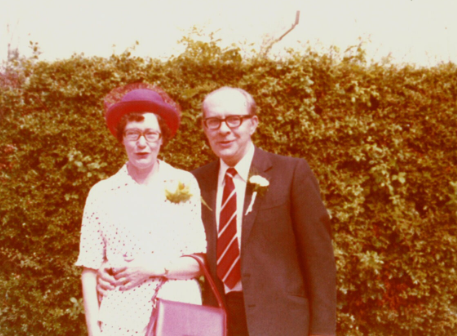 Jean and Peter Davey made many generous bequests during their lifetime and their caring natures now live on through their fund with us.
Jean Davey (nee Usher) was born at Great Bradfords Farm in Braintree in 1927. She spent many of her childhood years there and, later in life, returned to the farmhouse to share it with her husband Peter. Jean’s parents were dairy farmers and in 1948 went into business with the Magnus family from Chelmsford to set up the dairy company Magnus & Usher Limited.
Jean worked for the company from the 50s until the business was sold to Dairy Crest in the late 1980. She also worked with her husband running the Braintree division of the business known as Usher & Sons Limited. Jean met her husband Peter while working at Courtaulds in Bocking and took over the running of the family business when her parents retired. Jean and Peter were excellent ballroom dancers and ran dance classes for the milkmen they employed in the small social club that belonged to the business.
Sadly, Jean’s dancing was curtailed by the onset of multiple sclerosis whilst she was in her 20s and she lived with the illness for over 50 years. One of Jean’s other passions was her dogs and Jean and Peter made loving homes for many different dogs during their married life.
Jean and Peter had a bungalow built in the gardens of Great Bradfords Farm and made that their permanent home. Peter was by this time in poor health and died very soon afterwards. Jean lived in the bungalow until her death in November 2012.
Following the building of the bungalow, Jean and Peter decided that they wished to gift the old farmhouse and adjoining land to Abbeyfields for a Sheltered housing complex. After extensive refurbishment and building work, this was opened in 2007 and now provides 34 units of assisted sheltered housing. This was one of the many generous bequests made by Jean and Peter during their lifetime.
They were a very devoted couple and despite being very private, they were extremely generous to family, friends and both local and national charities. When Jean sadly passed away in 2012 she kindly divided her residual estate between 12 different charities. Most were national organisations, but she was also interested in supporting local charities and by leaving a bequest to us, she will now continue to support charitable activity across Essex for many years to come.
Developing young community ambassadors in Harwich
21st February 2025
Young people in Harwich will be receiving valuable training and mentoring to become community ambassadors, thanks to funding from two local charitable funds.
African Families in the UK (AFiUK) based in Colchester has received £6,000 jointly funded by the Harwich Mayflower Legacy Fund and the Harwich Haven Authority (HHA) Community Fund, both of which are managed by the independent trust, Essex Community Foundation (ECF).
AFiUK runs programmes across Essex that help people from ethnic backgrounds to connect with their local communities. The group serves as a one-stop place to receive advice, information, and matters relating to parenting for African families and other ethnic minorities living in the UK.
Rachel Walton, co-founder of AFiUK said, “We are so pleased to receive this funding which will enable us to run our Community Ambassador Training programme in Harwich.
“Our research has revealed that many young individuals have recently experienced heightened levels of bullying, racism, and fear, which is significantly impacting their well-being and sense of safety. There has also been a noticeable increase in anxiety, social withdrawal, and a reluctance to participate in community activities due to fear of being targeted.
“Our project in Harwich will focus on developing and nurturing young leaders who are deeply connected to their communities, equipping them to act as positive role models and effectively engage with and support, other young people in their community.”
The funding means AFiUK can provide comprehensive training, ongoing mentorship and the necessary resources to enable the young Ambassadors to make a meaningful impact and shape resilient, supportive and inclusive youth communities on a long-term basis.
Cllr Henderson, who set up the Mayflower Legacy Fund during his Mayoral year in 2020, visited the Vibe Youth Centre to meet the team who will be delivering this programme. He said, “It was a pleasure to meet the team behind this new initiative. Harwich as people will know, is a place close to my heart. It is a privilege to be able to support groups that are as passionate as I am about the community.
“Ethnic minority communities are still facing deep-rooted issues of racism and bullying. These have been heightened in recent times due to various high-profile cases of violence and unrest, which have since left significant impact on people’s mental well-being and sense of safety.
“It is more important than ever to support groups like AFiUK, who are tackling this issue with brilliant initiatives that will create a long-lasting positive impact in our communities.”
Since it was set up, the Harwich Mayflower Legacy Fund has given grants totalling over £11,000 to support local charities working in Harwich that are tackling a wide range of issues.
The Harwich Haven Authority Community Fund, set up with ECF in 2018, has given over £160,000 to charities and voluntary groups working in Harwich and Tendring, and is part of the company’s wider programme of community support.
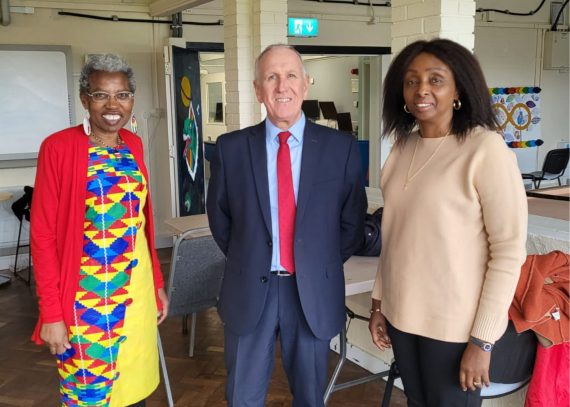
Cllr Henderson with Rachel, Co-Founder of AFiUK and one-to-one Youth Coach, Judy.
Charities urged to apply to the Essex Fund for support
20th February 2025
Essex based charities are encouraged to apply now, for financial support from the Essex Fund to keep their services and projects running.
The Essex Fund, which is managed by the independent charitable trust Essex Community Foundation, was set up by Essex County Council in 2000. Since it was set up, the Fund, which provides annual support to the voluntary and community sector in Essex, has given out over £1.5 million in grants.
Organisations and projects that help unpaid carers, improve the environment or engage people in environmental projects, provide a community resource or activities that help young people, including arts, culture and heritage projects, are all eligible for consideration.
Groups can apply for up to £5,000 towards their core and operating expenditure, project costs or capital items.
Cllr Jill Reeves, Chair of Essex County Council, said: “Local charities are under increasing pressure as they struggle to pay their bills and running costs alongside managing a growing demand for their services.
“These groups are an asset to our communities and are often a focal point for people who need extra support. We encourage them to contact ECF to talk about their funding needs to continue their valuable work.”
Charitable activities that have received funding in previous years include support for unpaid carers, projects to engage children and adults with learning disabilities, a rural play bus for children living in isolated and a wide range of musical, arts and culture-based community events.
Andy Payne Worpole, Director of Policy and Programmes at ECF, said: “We are pleased to manage the Essex Fund and work with the decision-making panel at the council to get funding to where it is needed most.
“These organisations play a vital role in our communities and the Essex Fund is one way that we can invest in their work and ensure they can continue to operate and help local people in need.
“The panel are particularly interested in supporting smaller voluntary organisations with an income of under £150,000, and projects that are working in areas of deprivation where there is a lack of facilities.”
The deadline for applications is 5pm on Friday 21 March.
How To Apply:
- Fill out our short application form here
- Chat with us instantly using the button in the bottom right hand corner (9am-4pm)
- Call us on 01245 355947
- Click here to book a time slot to speak with a grants officer
- E-mail grants@essexcf.org.uk
Our commitment to supporting local charities
29th January 2025
At a prestigious event marking the 35th anniversary of the Cranfield Trust, our CEO, Caroline Taylor, delivered a compelling speech on the critical role of small charities and the need for sustained support. The event, held at Mercers’ Hall in London, was attended by HRH The Princess Royal, who founded the Trust in 1988 to encourage skilled professionals to support the voluntary sector.
The challenges facing small charities
In her address, Caroline emphasised the unique position of small charities in responding to social issues.
She said, “Through our work, we know that smaller charities are deeply connected to social issues. They see firsthand how policy and politics impact the communities they serve and are uniquely able to respond to immediate and emerging needs.”
However, she also highlighted the significant challenges these organisations face, including rising demand, complex needs, and financial instability.
“Many charities are trapped in a relentless cycle of short-term funding, leaving little room to plan, innovate, or collaborate. Burnout in teams is growing, and recruiting and retaining skilled staff and volunteers has become increasingly difficult.”
Essex Community Foundation’s commitment
Caroline reaffirmed our dedication to supporting small charities in meaningful ways:
“We believe that a key role for us in Essex is to offer hope and some positivity in the face of the very real challenges that charities face every day. An advocate, if you will, that helps charities find solutions and a way through.”
This commitment has led to impactful initiatives such as multi-year, core-cost grants and simplified application processes to ease administrative burdens. She also highlighted the Foundation’s Thrive Programme, a partnership with Cranfield Trust, which provides charities with leadership development, mentoring, and tailored action plans.
“Since its launch in 2019, 53 organizations have participated in our Thrive Programme, becoming stronger and more effective in their work.”
The role of funders and advocates
In her presentation, Caroline called on the wider foundation sector to take bold steps to support small charities:
“Across the foundation sector, there are brilliant initiatives to improve grant-making practices. At Friends Provident Foundation, the CEO has worked with others to develop the Foundation Practice Rating, which encourages better diversity, accountability, and transparency.”
She also emphasised the importance of funders taking risks and championing small charities:
“Smaller charities often have brilliant ideas but lack the capacity to test them. Grant funders must take more risks and not play it safe.”
A shared responsibility
In closing, Caroline underscored the collective responsibility to ensure small charities continue to thrive. She said, “The strength of small charities lies in their deep community connections. Our role, as funders and advocates, is to ensure that our resources and structures are relevant and proportionate to enable them to continue delivering effectively.”
Her speech resonated with attendees, reinforcing the need for sustained commitment and innovation in supporting the voluntary sector. ECF remains steadfast in its mission to empower small charities and drive positive change across Essex and beyond.
Farewell to a community champion
It is with great sadness that we learned of the recent death of one of our supporters, Howard Briggs, aged 85.
Howard was a former councillor and Mayor of Southend in 2001/02. He was also the founder, along with his long-time friend Peter Croysdill, of the Southend Community Fund, as a lasting legacy to support charities and voluntary groups working in Southend-on-Sea.
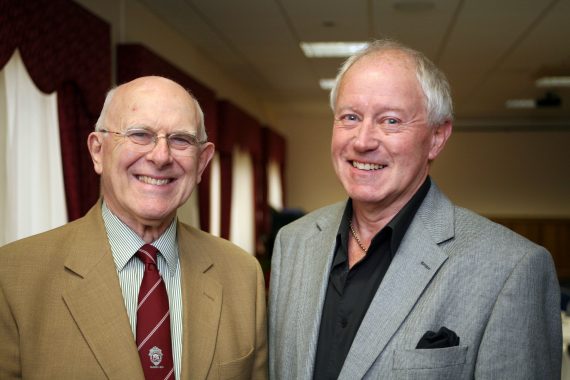
Howard and Peter worked hard to raise awareness of the Fund and organise a wide range of fundraising events during Howard’s Mayoral year. They raised an amazing £127,000 and this was just the beginning. Together with a panel of local people, they encouraged residents and businesses to channel their local giving through the Fund so that it would continue to grow.
To date, the Fund is valued at nearly £550,000 and has awarded grants totalling over £500,000 to charities that are providing support to people of all ages and are tackling issues that include help for the elderly, young people, carers, homelessness, mental health and disability, as well as community spaces and events.
Among the many charities to have received support from the Fund are Chalkwell Lifeguards to buy life-saving equipment, The One Love Project, a charity dedicated to supporting vulnerable people, and Southend YMCA providing practical help and advice to young people.
Peter Croysdill, President of the Southend Fund said, “Howard and I were friends for over 80 years. He will be greatly missed by his family and those who knew him. It is of comfort to know that the Southend Community Fund is a lasting legacy and tribute to his commitment and dedication to Southend and the local community that he cared so deeply about.”
David Hurst is Chair of the Southend Community Fund and a Trustee of SAVS (Southend Association of Voluntary Services), as well as being the current High Sheriff of Essex. David has been involved with the Fund since it began, helping to raise funds and agree which charities should benefit from support. He said, “Howard was a force for good, always working hard for his local community. He wanted to create a lasting legacy, something that wouldn’t be there one minute and gone the next. His foresight in establishing the Southend Community Fund is testament to his determination to make a difference in his local community.”
Zoe Brampton is Grants Manager at ECF. She said, “Thanks to Howard, the Southend Community Fund, has grown into a significant financial resource to support charities and voluntary groups in Southend. It is a wonderful legacy that he leaves behind and for which he will always be remembered.”
Howard was a true community champion, and we extend our sympathy to his family, friends and all who knew him.
How to give to the Southend Community Fund:
- Make a donation online
- Send a cheque made payable to the Southend Community Fund to Essex Community Foundation, 3 Hoffmanns Way, Chelmsford, Essex, CM1 1GU
- Consider making the Southend Community Fund a beneficiary in your Will. Call ECF for more information on 01245 35594 or find out more here