


Scout Hut gets a helping hand
19th July 2024
A well-used community hub in Brentwood is being given a new lease of life, thanks to a grant from the Beresford Foundation.
The grant of £1,219 means that the 1st Ingrave Scout Group’s hut will have a much-needed revamp, making it a safer and more attractive environment for all the groups who use it.
The Beresford Foundation was set up by the award-winning estate agents in 2015 and is managed by the independent charitable trust Essex Community Foundation (ECF) who aim to inspire local giving and manage many other charitable funds on behalf of individuals, companies, families and public bodies. Grants are awarded annually to support local charities, voluntary groups and individuals in the county.
Since it was established, the Beresford Foundation has so far awarded £4,000 in grants to help charities and voluntary groups working at the heart of their communities in Essex.
Welcoming the latest allocation from the fund, John Jolly, Chair of the 1st Ingrave Scout Group said: “This funding will enable us to do some essential repairs. Our hut was modified and extended around six years ago, but it is under fairly heavy wear and tear, with children’s games, rainbows, guides, beavers, cubs, scouts and the WI, along with parties in the community all using it regularly.
“The hut has needed interior renovating and repainting for some time, along with the skirting boards, panelling, and holes in the walls which needed repairing. Floorboards were also coming loose which would become dangerous if not repaired.
“Although the hut has wide community usage, it could be more attractive for other groups to use if the interior looked more appealing. The main hall doesn’t have any windows, so redecorating will make it a lighter, brighter environment for people to enjoy.
“If more groups are interested in using the building, revenue will be increased, enabling us to pay to keep the building looking good. “
Paul Beresford said: “At Beresfords we believe in supporting our local communities and we know that a small amount can make a huge difference, especially when costs are rising. We set our Foundation up with ECF to give support to grassroots charities who may not have the all the resources they need for the very valuable work that they do.”
Zoe Brampton, grants manager at ECF said: “Venues like the Scout Hut are a valuable resource for local communities, especially if they are in rural areas. Raising the necessary funds to keep them in good condition so they are safe and appealing to use is a constant struggle.
“Beresford recognises this as an issue and was pleased to give support to the Scout Hut from their charitable Foundation with us.”
For information about how your businesses could give locally through us, contact Perry Norton, Head of Development.
Why set up Payroll Giving?
28th June 2024
- For employees, it offers a simple, pre-tax way to support causes they care about, maximising the impact of their donations.
- For charities, it’s a steady, tax-efficient funding stream that saves on administrative costs.
- For employers, it can demonstrate their commitment to social responsibility. Plus, any matching payments or costs associated with running the scheme can also be offset against profits, thereby reducing Corporation Tax
However, a recent survey by the Charities Aid Foundation (CAF) highlighted that only 4,000 UK employers currently offer Payroll Giving and the number of employees donating to charity through payroll giving has declined by 13 per cent since 2020.
This drop in donations means that local charities are potentially missing out on “millions of pounds” at a time when the rising cost of living is having a huge impact, as they try to balance paying increased running costs alongside greater demand for their services.
Dan Insley is a partner at Streets Whittles, a Chartered accountancy firm working with businesses and individuals across Essex and Suffolk. The company has a long association with ECF and has provided a payroll service on a pro bono basis since the Foundation started in 1996.
Dan said, “Payroll Giving is a convenient and effortless way for employees to voluntarily donate to registered charities directly from their salary, eliminating the need to make manual bank transfers or paperwork.
“Interestingly, not many employers offer Payroll Giving and few employees seem to be aware that the system exists. This is surprising as there are clear tax benefits to both the individual and the employer and setting up a Payroll Giving Scheme is quite straightforward.
“There are a number of approved Payroll Giving Agencies who can work with your payroll department or provider to set up a process and add the salary deductions into your payroll system. Once established, the agency will facilitate the process of deducting donations from employees’ salaries and distributing them to their chosen charities.”
Perry Norton, head of development at ECF said, “Businesses are often judged by the difference they are making in their local communities and it’s a trend we have been seeing for some time.
“People are paying more attention to how companies engage with and contribute to the communities where they operate. This can include everything from environmental sustainability initiatives to charitable donations, support for local events, allocating time for staff volunteering, and encouraging staff to use their skills and expertise through charity trusteeship.”
Companies who actively demonstrate their commitment to supporting their communities can enjoy a range of benefits, including enhanced reputation, increased customer loyalty, and improved employee morale. As a result, many businesses are incorporating community support and social responsibility into their core values and strategic planning, recognising that it’s not just good for society but also good for business.
Perry explained, “With around 5,000 registered charities in Essex and the same number of voluntary and community groups, it can be difficult to know who to give money to and where it will have the greatest impact.
“At ECF we work with businesses helping them to establish an approach that fits with their corporate ethos, while making an immediate difference and having a lasting impact on the lives of local people.
“One of the easiest ways for businesses to engage their staff in supporting their community is to adopt a Payroll Giving scheme which is a tax efficient way for individuals to support charities.
“If businesses set up a charitable fund with us, staff can become fully involved in fundraising and making decisions about which charities to support. We introduce them to grassroots organisations they may not be aware of and are in need of funding.”
If your business would like to discuss ways to support your community, please contact Perry Norton at ECF on 01245 355947 or email perry@essexcf.org.uk
Feelgood Gardens
With the welcome arrival of mid-summer, our feature in Essex Life this month looks at how local charities and community allotments are helping to boost wellbeing.
The summer months bring the season of plenty, and allotment holders across Essex will be reaping the benefits of their hard work.
Individual allotment plots have been part of the county’s landscape for decades and now community allotments are also regaining popularity.
Growing fruit and vegetables is hugely satisfying, but for some people, especially those who have disabilities, access to an allotment and all the benefits this brings can be very difficult. Local charities and communities are tackling these obstacles and finding innovative ways to make it possible for people of all abilities to enjoy the open air and grow healthy produce.
Through our grantmaking, we have funded many horticulturally based projects that are making a huge difference to the lives of local people.
Dig It Community Allotment
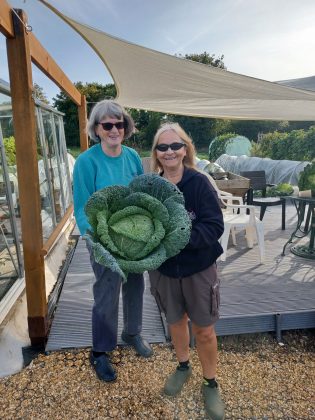 The Dig It Community Allotment in Saffron Walden is a place where people of all abilities and from all kinds of backgrounds can benefit from being outdoors and learn how to propagate seeds, nurture what is planted and harvest what is grown.
The allotment buzzes with activity and has been given a £3,000 boost by ECF through two of the funds it manages, The Diana Tinson Fund and Saffron Community Fund.
Laura Thompson-Harper is the project manager for Dig It Community Allotment. She said: “We were absolutely delighted to receive this support and are so grateful to ECF and their funders for enabling us to deliver much needed outdoor projects at our site. The grant will help us to fund staff to provide activities through our Big Bed project, increasing raised planters and accessible planting areas at our allotment site for service users with limited mobility and physical disabilities.
“Our work includes teaching skills on growing your own food, cooking it, reducing food waste, companion planting to reduce chemicals, power of soil, and composting. We have received overwhelmingly positive feedback on our work at Dig It Community Allotment and have seen the tangible impact it has had on service users and the local community as a whole.
“We have seen many new referrals at our Open to All, Monday & Thursday sessions from older and younger individuals with limited mobility, who need additional support due to physical disabilities. We have strong links with many local organisations, including Café Cornell and Saffron Walden Mencap Society, who currently run weekly sessions with their service users at our site.
“Saffron Walden Mencap Society and their volunteers have collaborated with us to create a large summer house to accommodate indoor sessions and given us expert advice in planning and ways to improve accessibility on site. We have been extending access collaboratively throughout the plot to develop a wheelchair accessible greenhouse and pathways.
“Dig It provide specialist support from our staff and lead volunteers, offering ergonomic and disability-friendly equipment. This alongside the design of our allotment makes the project accessible for all.”
Plant Pots and Wellies
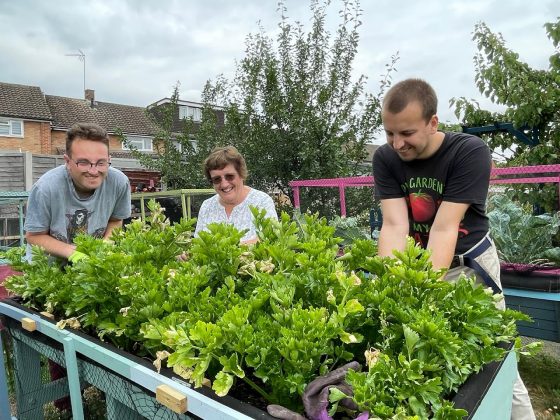 A large Harlow Council allotment site used by the Plant Pots and Wellies initiative has been transformed into a place of fun and positive activity. An initial grant from ECF helped launch the project in 2018 and its good work will expand and grow, thanks to further funding of £4,000 from the Harlow Recreation Trust, run by ECF.
“We are an exciting and inclusive community initiative, supporting children and adults with additional needs,” said Rowen Saunders at Plant Pots and Wellies.
“Our project provides opportunities in a safe space for horticultural and outdoor therapy.
The grants mean that activity sessions will be open for an extra day each week for a year. The sessions will be for children, young adults, and adults with additional needs and for carers.
“In the children’s section of the allotment each area is based on a children’s book or character.
“It is helpful for children with additional needs to have access to outdoor learning through play. They take part in activities that increase confidence, address sensory issues, learn about the environment and engage in creative outside play. Sessions are varied each week to coincide with the different seasons and involve utilising different skills, learning to grow food from seed and sensory activities such as using our mud kitchen.
“Adults take part in gardening, carpentry, painting, craft and other activities. We have chickens and rabbits that are great for illustrating how to look after animals and part of the activities include feeding, caring for and spending time with them.
“Those involved in our activities learn new skills whilst increasing their confidence. Socialising and working with a team of great people has created a close knit community that we are all proud to be part of.”
The Wilderness Foundation
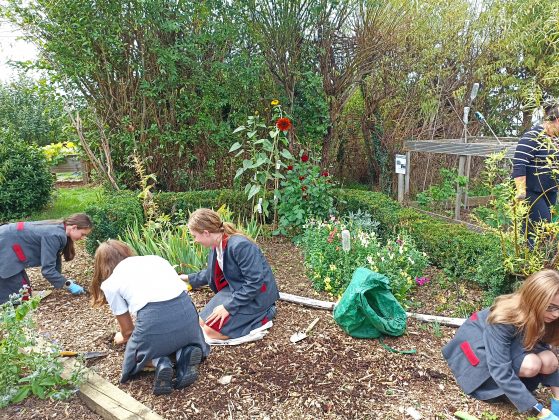 The Wilderness Foundation received £2,846 from the Alan and Fay Cherry Fund, Chelmsford Star Co-op Community Fund and the Saffron Community Fund for their Down to Earth Allotment Project. Community allotments help build connections to nature through therapeutic horticulture and volunteering, where people learn and develop new skills to benefit their mental and physical wellbeing.
The thriving project has a total of six plots at the Melbourne Community Allotments site in Chelmsford.
Jo Roberts, CEO of the Wilderness Foundation said: “Through our allotments, we work with members of the community who are vulnerable and socially isolated as well as those with special educational needs, NHS patients and other community groups. Those taking part benefit from working together, helping reduce social isolation, anxiety and other issues affecting their mental wellbeing whilst also learning new skills in gardening and conservation.
“Our weekly allotment workshops help people to spend more time outdoors in nature, learning about the importance of sustainability and environmental responsibility, gaining confidence and communication skills. The allotment programme is open for all and gives residents and groups an improved sense of community, whilst supporting their mental health by being in nature.
“Our project educates local people about the benefits of healthy living, healthy eating and the positive impact to the environment when we work in collaboration with each other and nature. The scheme also directly contributes to community health and well-being, with organic food grown on site. Any excess produce is donated to the local food bank, spreading the benefit of the project even further within the community.”
Market Field Farm
Market Field Farm near Colchester, whilst not an allotment, is establishing a project on a five-and-a-half-acre site to give young people with disabilities the chance to develop skills and receive training in a real working environment and create paid employment as well as volunteering opportunities.
It is an innovative project that has received support from ECF with a grant of £5,471 given from the Alan and Fay Cherry Fund and Austin Hicks Charitable Fund. The project is being developed by Market Field School which is based in Elmstead Market and helps young people with special educational needs and learning difficulties gain valuable skills experience so they can secure paid employment in the future.
Whilst the creation of the farm takes shape, the organisation provides a conservation enterprise, Market Field Grows (MFG), which collaborates with the Tree Council, Colchester City Council, Essex County Council and the Big Green Internet to provide teams dedicated to planting trees on a massive scale across north east Essex. They also work with local farmers on rewilding projects, which focus on encouraging a diverse range of wildlife.
Chloe Jennings, Director of Operations for Hope Learning Community and Market Field Farm said: “Currently only 5.1% people with learning disabilities will secure paid employment during their lifetime. We are committed and determined to challenge and change this and believe that Market Field Farm and Market Field Grows both have the potential to do it.
“The team looked at what was required in the region and the vision for Market Field Farm and Market Field Grows were developed. As we head into our third year, we now employ 10 young people and two team leaders and plans for Market Field Farm are fully formed.
“The young people we support enjoy being outdoors, whatever the weather, going to work and feeling independent. It helps them further build their confidence to gain valuable experience of the workplace and develop as individuals, learning to socialise and interact with other people. All of this will support them positively for the future.”
The grant from ECF will enable Market Field Farm to buy more equipment and continue providing more consistent work for the young people involved.
Allotment Facts
- There are an estimated 330,000 allotments across the UK.
- The average waiting time for an allotment is six to 18 months and there are around 90,000 on waiting lists for an allotment.
- Allotments can vary in size but the most common is ten rods or poles, which is an old Anglo-Saxon measurement roughly equal to 250 square metres.
- The traditional date when rent is due on an allotment is St Michaelmas day, 29 September.
- Under the 1950 Allotment Act, the keeping of hens and rabbits is permitted so long as they are for the tenant’s own use and not for business or profit.
- There’s a national society dedicated to allotments. Find out more at The National Allotment Society: nsalg.org.uk
- National Allotments Week 2024 runs August 12-18.
Leave a legacy and create lasting memories
27th June 2024
Daphne Woodward was a community champion in every sense and after she died in 2014, she left a legacy to ensure local families who were in need of support, could spend some quality time together.
We are privileged to manage the Fund in her memory and the stories we receive from families who have benefited from her generosity, are heartwarming, like the one from Lucy and her daughter who were able to go to Butlins on their first holiday together. They both have mandibulofacial dysostosis, also known as Treacher Collins syndrome, which is a rare syndrome characterized by underdeveloped facial bones.
On day one of their stay in Butlins, Lucy sent a message to Home-Start Essex saying, “Thank you so much, we have just woken up this morning and have one very, very excited girl!!!”.
 When they returned from their holiday, Lucy wrote: “We had the best time ever, thank you so much. I feel my daughter and I have bonded and grown stronger more than I knew was possible! The memories we’ve made are so special and as she’s going to school in September, it was perfect timing – thank you, thank you, thank you!”
Lucy and her daughter are just one of 65 families to date, who have benefited from Daphne’s Fund which gives grants throughout the year to Home-Start organisations in Essex, allowing them to offer families the opportunity of taking a short UK respite break or day trip. This has helped them to create memories, strengthen family bonds and return feeling refreshed from life stresses, such as post-natal depression or bereavement.
Philip George, who is a former trustee of the Trust, said, “The Trust was established under the will of Celia Allen, a very close friend of Daphne Woodward. Initially, it was quite modest, but some years later Daphne herself died and left a significant part of her estate to the Trust.
“The other trustees and myself then decided that greater expertise was needed to properly look after the fund. We approached Essex Community Foundation, and we were thrilled that they were prepared to take the trust over. In the ten years since then, the fund has gone from strength to strength.”
Daphne Woodward
 Daphne Lilian Burley was born in 1926 in South Kensington. The family later moved to Colchester where Daphne attended the County High School for Girls. Sadly, her plans to attend Six Form College were cut short following the death of her father and instead, she applied for a job in the Colchester Public Library, where, over the next 42 years, she would qualify as a librarian, become Chief Assistant and develop the library’s recorded music collection. In 1952 she married Fredrick Woodward who worked as a local government officer.
After her retirement in 1984 and Fred’s death in 1988, Daphne’s involvement with the Lion Walk Church led to her becoming a qualified and valued lay preacher. She was very artistic and used her talents to raise funds for various local charities, including St Helena Hospice and Home-Start. Her interest in local history also saw her qualify as a town guide.
A bequest from her good friend, Celia Allen, who she had met through Home-Start, prompted Daphne to set up a trust to help struggling families. The Fund in her name now supports Home-Start organisations in Essex, allowing them to offer families who have at least one child under 5 and are under stress from issues including post-natal depression, isolation and bereavement, the opportunity of taking a holiday. Such opportunities can create precious memories, strengthen bonds and help families to return feeling refreshed.
If you want to make a difference in your local community and support the issues and causes that mean most to you, please contact us or email Perry Norton – perry@essexcf.org.uk to have a conversation.
Keeping rural communities moving
Our latest story in Essex Life highlights the issue of transport in rural communities in Essex.
Essex has a wealth of attractions and activities. But for people living in rural areas travelling around the county and beyond can be a problem.
Bus and train services can be sparse, or non-existent in some places, meaning that those without their own forms of transport are forced to rely on friends and family, or use expensive private transport services, not only for leisure, but also for healthcare, education and employment.
For anyone unable to drive due to age, disability, or other reasons, the restrictions caused by a lack of transport can lead to feelings of isolation and loneliness.
Local charities and voluntary groups in the county are tackling the issue by developing projects including ride-sharing programmes, community buses and volunteer driver networks which are helping to improve quality of life for people of all ages in rural Essex, giving them access to affordable and reliable transport. In addition, mobile services are providing activities for children and young people, and a safe environment where they can play and meet.
These and other projects which tackling a wide range of services in rural areas are being supported by grants from our various charitable funds:
Brentwood Community Transport has a bus called Beryl, which, over the past year, has provided a total of 32,409 passenger journeys. The bus was named in recognition of a grant of £46,000 received from the Malcolm and Beryl Crook Fund to help buy and adapt a new minibus. The Fund was established with ECF in 2016 following Beryl’s death and honouring her wish that it be used for the benefit of patients attending the Brentwood District Community Hospital.
The transport scheme has two vehicles running a figure of eight route around Brentwood, connecting the local high street, Brentwood and Shenfield Stations and Brentwood Community Hospital, running a scheduled timetabled service.
Tina Tickner, chief executive officer of Brentwood Community Transport said: “The passengers using the service are mainly elderly and can use their valid concessionary bus passes. The feedback they give to our organisation is how the service is their lifeline, giving them access to health services and the High Street. Most travel on a regular basis and know our drivers by name and like to share a conversation.
“The car park at the hospital is oversubscribed so the bus reduces stress and enables them to get to their appointments and allowing time for a nice cuppa at the hospital café. The service, which has been running since 2001, was set up due to no mainstream public transport going directly into the community hospital grounds.”
 Wyvern Community Transport (WCT) is an established charity that plays a pivotal role in ensuring the accessibility, wellbeing and inclusivity of the residents of Castle Point and Rochford.
The latest addition to their fleet of seven wheelchair accessible vehicles was unveiled recently at the Castle Point Borough Council offices.
Marie Davies is transport manager for WCT. She said: “We provide a door-to-door transport service, a Dial A Ride service and Canvey Shopper schemes, all of which help to reduce exclusion and alleviate loneliness and feelings of isolation.
“Our service enables people to take part in activities that they would otherwise struggle to travel to, including social groups, lunch clubs, church groups, visiting friends and family, as well as hospital and medical appointments.”.
Uttlesford Community Travel provides a door-to-door minibus service for those who are over 60, disabled or unable to access conventional transport services.
The minibuses are wheelchair accessible, enabling all members of the community to get out and about for journeys which can include trips to the shops, hairdressers, to visit friends and garden centres. The minibuses can also be hired for group activities during the week or at weekends for outings including trips to the coast, theatre, afternoon tea, stately homes, school trips and sports meetings.
A hospital car service is also provided for those who have difficulty getting to any type of medial appointment, including hospital, clinic, dental, opticians, by matching requests for transport with our volunteer drivers.
Mick Bott, general manager for the organisation said: “The population of Uttlesford is increasing and there is a growing difficulty of residents being able to access to public transport due to cutbacks on services in rural areas. Without our transport service many people in the community would be unable to undertake everyday activities.”.
 Uttlesford Buffy Bus
Buffy the double decker playbus, regularly supported with grants from ECF, brings free fun and activities for families with young children in 15 isolated urban and rural communities throughout Uttlesford.
The 30-year-old service provides weekly play and activity sessions. Buffy Bus also provides fun days during the school holidays. It means that families have easy access to supervised play sessions, without having to travel and it is often the only place where families can meet.
Project manager Kerry Mattholie said: “Buffy Bus has been specially converted to provide easily accessible and supervised play for under-fives. The inspired initiative for a mobile service in a widespread rural area has proved invaluable.”
Bar’n’Bus Trust (BNB), running throughout South Essex, is a long-established and respected provider of youth work that has developed and adapted services to meet the needs of young people over the years.
Chief executive Jamie Sawtell said: “At the heart, Bar’n’Bus seeks to provide youth work support to young people ‘where they are’, taking services to them in the places that are most accessible. This means working in public spaces like parks, high streets and skateparks, as well as making use of community facilities and linking with local schools.
“We use a bespoke vehicle for our mobile outreach service, giving young people easy access to safe drop-in spaces where they need it and offering positive activities.”
BNB has been given ongoing support by ECF over the years, including grants from the High Sheriffs’ Fund. A recent grant funded a young women’s self-defence and safety programme in Basildon.
Founded in 1993, Bar’n’Bus works in partnership with local churches, councils and schools and has delivered thousands of hours of community-based youth work, having a county-wide reach if required. The charity is motivated by the Christian principle of compassion and exists to provide for young people’s social, emotional, physical and spiritual needs regardless of their beliefs, background or status.
In Memory of Sir Jack Petchey CBE
It is with great sadness that we learned of the death of Sir Jack Petchey CBE on 27 June.
He led an extraordinary life, growing up in Manor Park and leaving school aged 13 with no qualifications. His spirit and determination, combined with his entrepreneurial skills enabled him to build a multi-million-pound empire. However, it was his dedication to philanthropy and his support of young people for which he will be remembered.
 The Jack Petchey Foundation was established as a charity in 1999 and has invested over £170 million in grants to support youth projects across London and Essex. Sir Jack used his entrepreneurial skills to deliver a range of innovative schemes for young people involving public speaking, dance, sport and music. The schemes all aim to boost aspirations by rewarding young people’s achievements and encouraging them to take pride in what they have done.
Caroline Taylor, CEO at ECF said; “Sir Jack was an extraordinary man who fundamentally believed in helping young people to be the best version of themselves by giving them tools to develop skills and confidence.
“His work with local charities, including Essex Boys’ and Girls’ Clubs, has enabled thousands of young people to participate in programmes which have tested their resilience, build teamworking skills and broaden their horizons. In the words of their CEO, Martin Solder, ‘if you think you can, you can!’”
Sir Jack will be missed by all who knew and worked with him and by all the young people whose lives he has helped to transform. But thanks to his foresight and generosity in establishing his charitable fund, his legacy will continue for years to come.
You can read the full obituary for Sir Jack here